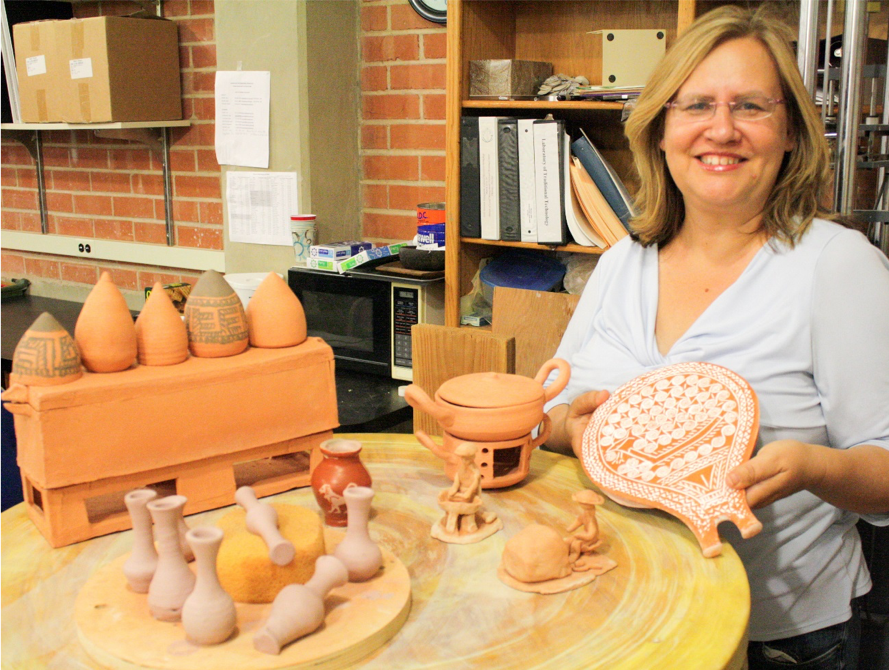
Dr. Eleni Hasaki with courseware reproductions. Photo: Eleni Hasaki
Accessing Greek Kilns Online: An Interview with Kiln WebAtlas Director Eleni Hasaki
Using GIS, Associate Professor of Anthropology and Classics at University of Arizona Eleni Hasaki and her colleagues created an online database for scholars to document, search, and continuously update kiln locations in Greece.
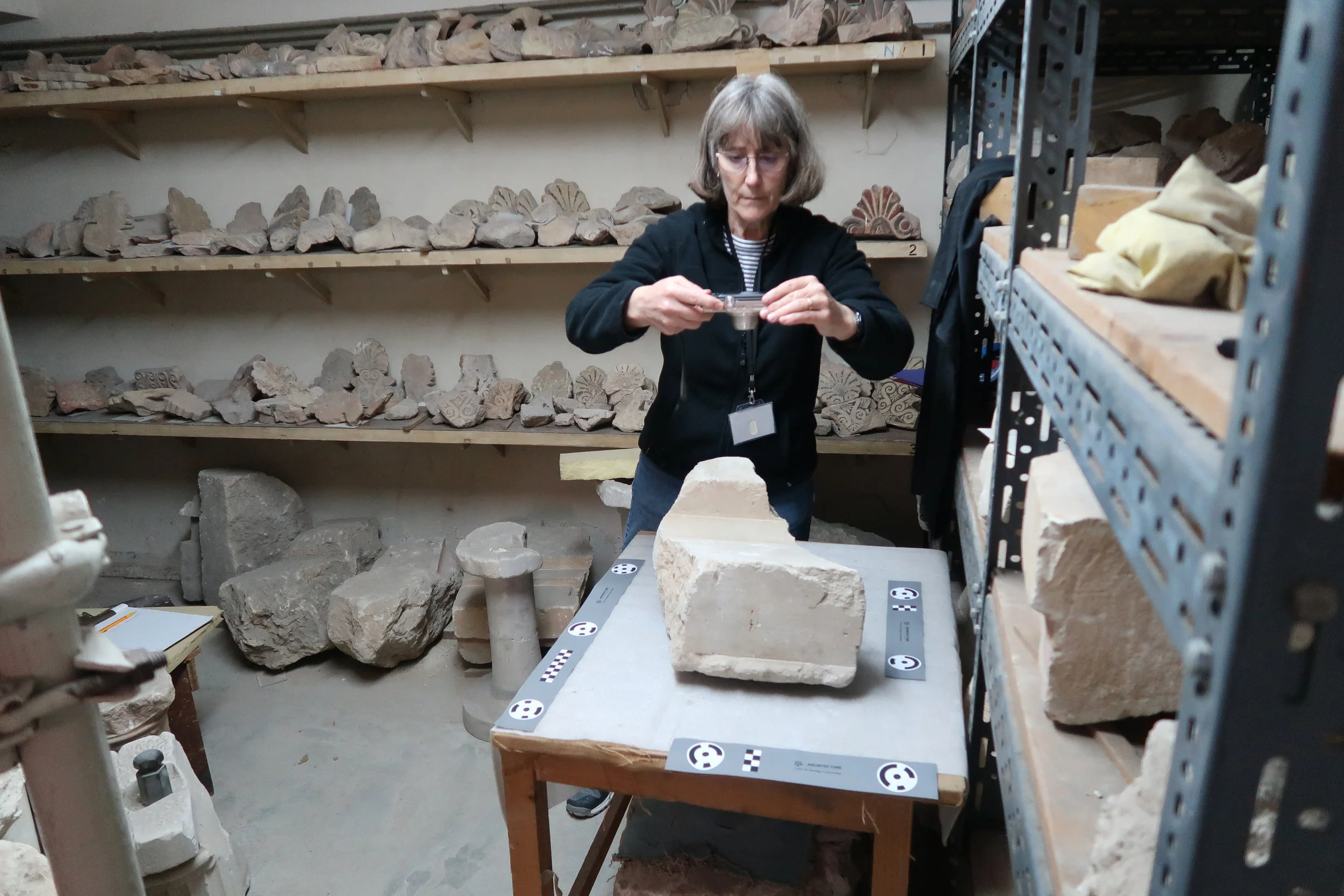
Photo: Nancy Klein in the Acropolis storage room, Nancy Klein.
Studying the Architecture of the Athenian Acropolis: An Interview with Nancy Klein
Encouraged by her Bryn Mawr advisors and peers, Nancy Klein began her longstanding relationship with the American School in 1988. “At the time, there was a Bryn Mawr tradition to go to the American School. Two others and I attended as Regular Members that year and Bruni Ridgway (then Rhys Carpenter Professor of Classical and Near Eastern Archaeology at Bryn Mawr College) was the Whitehead Professor in the fall,” said Klein. “Jenifer Neils (Case Western Reserve University) was the Whitehead in the spring and John Camp was the Mellon Professor. That was my jump into this extraordinary program.”
Photo: Daniel B. Levine at the American School of Classical Studies at Athens, Lillian Kustec.
An Interview with Daniel B. Levine, 2018 Gertrude Smith Summer Session Director
Each summer the American School of Classical Studies at Athens offers an unparalleled opportunity for graduate students, advanced undergraduates, and faculty from any accredited institution of higher education, and primary and secondary school teachers to experience Greece’s history and culture. After having participated in the Summer Session of 1974 and returning to the School this year for his fourth tenure as the Gertrude Smith Summer Session Director, Daniel B. Levine, Professor of Classical Studies at Fulbright College, University of Arkansas, understands better than anyone how a summer with ASCSA can create memories and build relationships that last a lifetime.
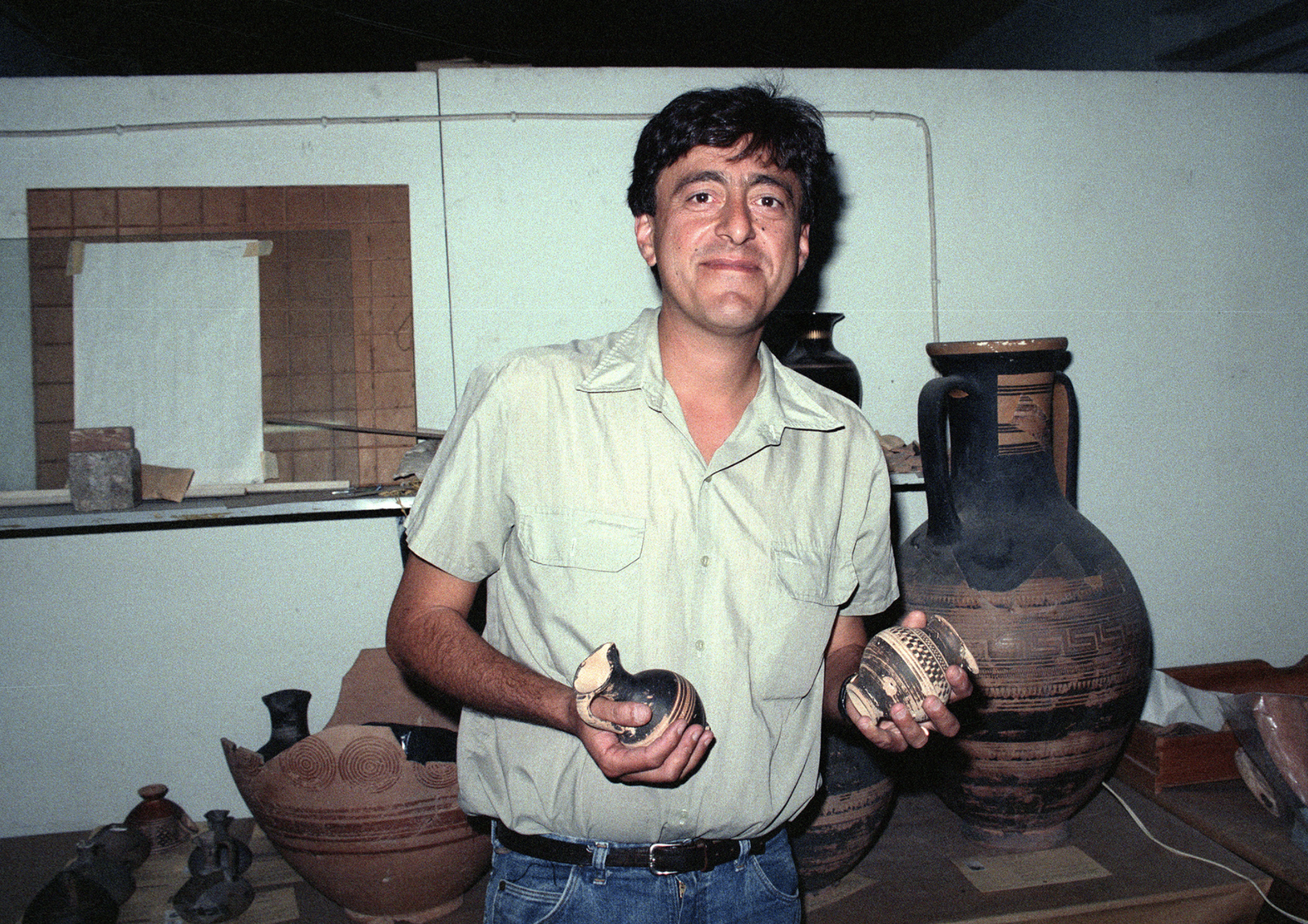
Photo: John Papadopoulos working in the South Workroom of the Stoa of Attalos in the summer of 1995 or 1996, John Papadopoulos.
Early Iron Age Cemeteries in the Agora: An Interview with John K. Papadopoulos
The Early Iron Age: The Cemeteries (Agora XXXVI) by John K. Papadopoulos and Evelyn Lord Smithson, with contributions by Maria A. Liston, Deborah Ruscillo, Sara Strack, and Eirini Dimitriadou, is the newest addition to the Athenian Agora series. This volume, the first of two dealing with the Early Iron Age deposits from the Athenian Agora, publishes the tombs from the end of the Bronze Age through the transition from the Middle Geometric to Late Geometric period. Here, Papadopoulos, Professor of Archaeology and Classics with the Cotsen Institute, UCLA, speaks with the American School about the publication of this volume, its history, and its subsequent influence on research in the Athenian Agora.
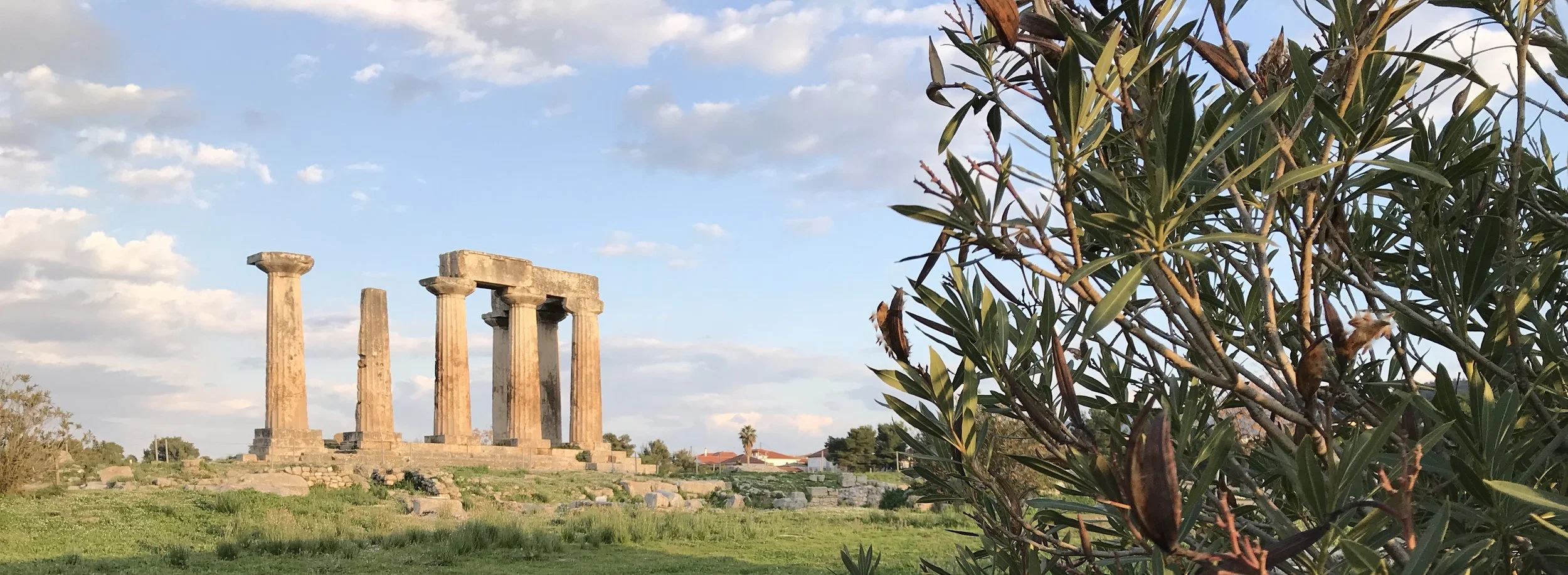
Photo: Temple of Apollo in Ancient Corinth, Lillian Kustec.
Increasing Accessibility through the Ancient Corinth: Site Guide
Ancient Corinth: Site Guide is the first official guidebook to the site of ancient Corinth released by the American School of Classical Studies at Athens in over 50 years. The new publication comes fully updated with the most current information, color photos, maps, and plans making it an indispensable resource for the casual tourist or professional archaeologist new to the site. In preparation for its release, the four authors—Guy D. R. Sanders, former Director of Corinth Excavations, Jennifer Palinkas, instructor at Harford Day School in Maryland and excavator at the site, Ioulia Tzonou-Herbst, Associate Director of Corinth Excavations, and James Herbst, Architect of Corinth Excavations—discuss the guide and their hopes that it will increase the accessibility of Ancient Corinth.
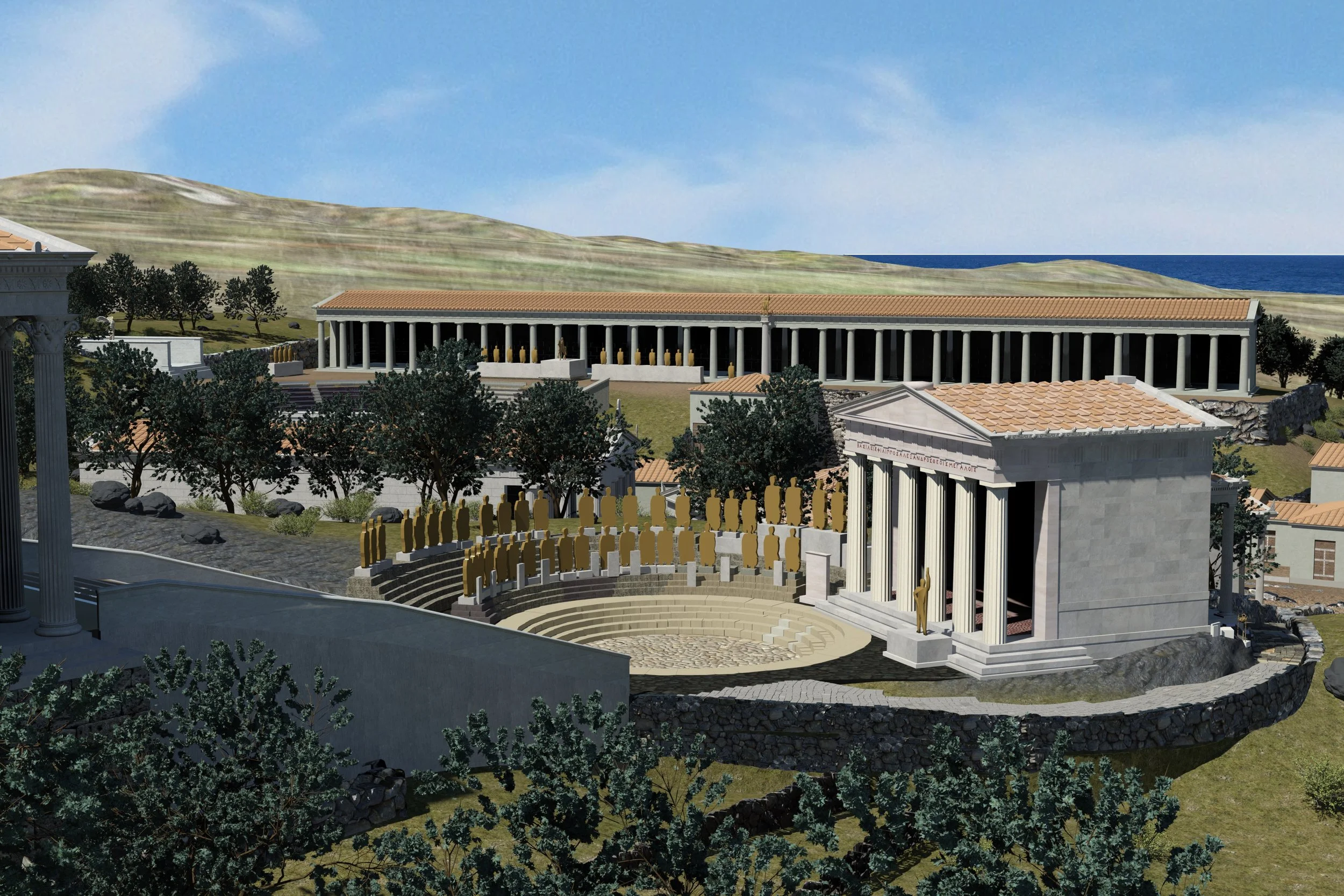
Photo: Restored digital model of the monuments on the Eastern Hill, Samothrace, Bonna Wescoat.
Examining Samothracian Agency: An Interview with Samothrace 9 Author Bonna D. Wescoat
Bonna Wescoat has excavated at Samothrace for the past 40 years, but she was initially captivated by the site while receiving her undergraduate degree in art history from Smith College. “I went to the same college as my mother, and she recommended I take a Greek art class with one of her most memorable professors—Phyllis Lehmann. I took the class, and the way Lehmann spoke about Greek art, and Samothrace in particular, was just absolutely magical,” explained Wescoat. Her interest in Samothrace continued in graduate school, when she asked Lehmann if she could attend the excavations. “I was getting my graduate degree in England, and because the Samothrace excavations were run by the Institute of Fine Arts, Lehmann had to ask then-director James McCredie if I could join,” said Wescoat. “He said I could come for one month. That was in 1977, and I never looked back.”
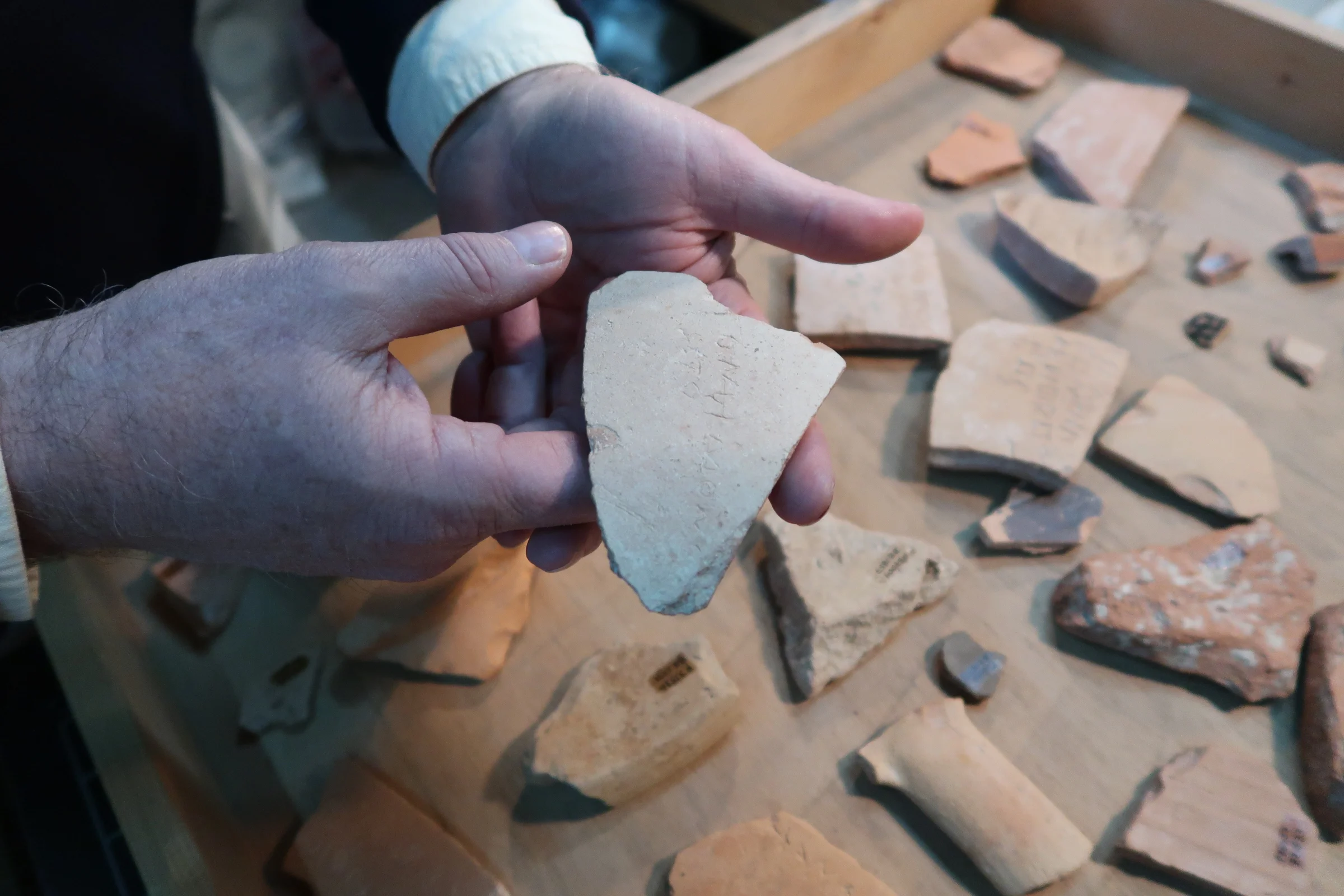
Photo: Jim Sickinger with ostraka from the Athenian Agora, Lilly Kustec.
Reconsidering the Ostraka of the Athenian Agora: An Interview with Jim Sickinger
Following his initial experience with the American School, Associate Professor of Classics at Florida State University, Jim Sickinger found himself returning to Greece year after year. “I first came to the American School as a Summer Session participant,” recalled Sickinger. “I had studied Greek and Latin literature for the previous 8-10 years but had never really appreciated that there is a physical reality behind or with the texts one reads. I returned from the session and immediately asked my advisor, Alan Boegehold, what I needed to do to spend a full year at the School.” Sickinger, determined, quickly finished his exams, applied for the Regular Member Program, and was accepted for the fall of 1989. That same summer he was already back in Greece as a volunteer sorting pottery in the Agora and then on Samothrace helping James McCredie with an architectural study.